OpenSimWorld is the directory of 3D Virtual Worlds based on OpenSimulator and connected through the HyperGrid. Learn More
New Members
QueenieStardust, Andru83, Cyrine, IngersollSven, NinaSiva, Lyynn2, Quaneka, LYNNN, 700r4s, BerndZumba, Charlene23, EvieDeAngelo, RayneDeAngelo, Frank Duval, Tessa, InesGardera, Janice Humble, Jasmine Jynx, David, WillyLikes
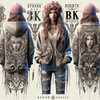
OMG... WOW... Someone copied my whole gallery!... i am torn beetween speechless, flattered and a bit angry because this person never asked.. so anyway, would you please be so kind to put teleporters to my grid or something to find the real creator of this work?
i asked Chat GPT for a comment to our discussion:
https://cozycomfortsgrids.wordpress.com/2026/07/21/questio...
i asked Chat GPT for a comment to our discussion:
https://cozycomfortsgrids.wordpress.com/2026/07/21/questio...
Liked by: 



Comments
Comments are locked
No one has ever copied the entire arkham grid, or even a region of it. So if imitation is the highest form of flattery, consider yourself flatterized.
like(0)

Concerning the gallery on the picture, they dont say they made it, they even made a sign for my brand, and there is still my name in the object, no copybotting reupload... my questions about this special case i mentioned earlier in this post. CCC Shoppe gave some general info about AI artwork, that is very interesting and can be important for all who like to create art with AI. Thank you for this CCC Shoppe! We will see in the future, maybe in special cases out of our world here, maybe new laws or decisions. Me personally for my RL and graphic artwork, i am more on the side of those who would like to protect their own work... but my work with Suno music is based on other peoples musical creativity.. I am trying to discuss this with my friends who are musicians... but well, what is live mixing from DJs? They also make collages of other peoples work... thank you for your participation in this discussion, it is very interesting for me, it leads into the future.....
well, Ceres, is it the same to share things you imported from SL, to take it from these creators or to take some very individual pictures made by an artist? I dont know, i just wanted to start a discussion about it, lets say these are more philosophical questions... my pictures did not have been stolen, this is absolutely not the case, they were free to copy... I am only so surprised that somebody took it all, the whole collection to make his own gallery out of it... without talking to me... maybe i am just a public property then, when making it full perm... but is there some lack of respect or not? - funny is, that in some pictures, I had integrated my RL face... i think this might give me the copyright?
like(1)
well, Ceres, is it the same to share things you imported from SL, to take it from these creators or to take some very individual pictures made by an artist? I dont know, i just wanted to start a discussion about it, lets say these are more philosophical questions... my pictures did not have been stolen, this is absolutely not the case, they were free to copy... I am only so surprised that somebody took it all, the whole collection to make his own gallery out of it... without talking to me... maybe i am just a public property then, when making it full perm... but is there some lack of respect or not? - funny is, that in some pictures, I had integrated my RL face... i think this might give me the copyright?
- In most cases, AI-generated images are not automatically protected by copyright, even if someone creates them and publishes them on a website.
The issue is legally complex, but I'll give you the clear, practical answer as it currently applies (2026) in Germany and the EU.
!!-Key message:
A work is only protected by copyright if it contains a human, creative intellectual contribution.
Pure AI images without human creative contribution → no copyright.
AI images with strong human influence → potential copyright.
Why AI-generated images are often not protected
In Germany and the EU, the following applies:
Only a human can be the copyright holder.
An AI cannot be the copyright holder.
If a human simply enters a prompt ("take me a picture of XYZ"), this is considered
- When AI-generated images can be protected
When humans intervene significantly in a creative way, e.g.:
very detailed, creative prompts
iterative control of the image
selection, editing, composition
combining multiple AI outputs into a new work
manual post-processing (Photoshop, GIMP, etc.)
Then the result can be considered a human work → copyright protection is possible.
- What does this mean for website operators?
If someone uploads AI-generated images to a website:
They own the usage rights granted to them by the AI platform.
But they don't automatically own the copyright.
Others may reuse the image if no human creative contribution can be proven.
Many platforms (Midjourney, DALL·E, Stable Diffusion) grant users usage rights, but not copyright.
like(2)
The issue is legally complex, but I'll give you the clear, practical answer as it currently applies (2026) in Germany and the EU.
!!-Key message:
A work is only protected by copyright if it contains a human, creative intellectual contribution.
Pure AI images without human creative contribution → no copyright.
AI images with strong human influence → potential copyright.
Why AI-generated images are often not protected
In Germany and the EU, the following applies:
Only a human can be the copyright holder.
An AI cannot be the copyright holder.
If a human simply enters a prompt ("take me a picture of XYZ"), this is considered
- When AI-generated images can be protected
When humans intervene significantly in a creative way, e.g.:
very detailed, creative prompts
iterative control of the image
selection, editing, composition
combining multiple AI outputs into a new work
manual post-processing (Photoshop, GIMP, etc.)
Then the result can be considered a human work → copyright protection is possible.
- What does this mean for website operators?
If someone uploads AI-generated images to a website:
They own the usage rights granted to them by the AI platform.
But they don't automatically own the copyright.
Others may reuse the image if no human creative contribution can be proven.
Many platforms (Midjourney, DALL·E, Stable Diffusion) grant users usage rights, but not copyright.
Ah ok, Arcfury, that is very interesting... so all my graphic artwork on my websites is also free to copy? I have lots of questions about this topic that i could discuss with Chat GPT. I often use my RL artwork to change it with AI, this might then become a public property, but what when i use my personal AI artwork and mix it with other elements like collages? Digital Artwork could be protected... collages should make possible to have a copyright?
like(1)
Yes, for now, any AI image you have posted can be taken by anyone, reposted without credit given, and nothing legal can be done about it.
You have some other good questions, but I am afraid I am not an expert in this. A copyright lawyer would know better.
But I have wondered, what if no one can tell that AI was used to create or enhance the item? Would I need to tell anyone that AI was used? I don't know.
This situation now is similar to when photo cameras were invented. The artists of that time didn't appreciate the camera's invention since now anyone with a small box can flip a switch and create a picture that would have taken an artist a long time to create. It was a while before photographers were taken more seriously. It may be a while before the population notices that it can take a lot of creative work to produce decent AI image, and that it is not so simple as using a short phrase prompt in one instant. Maybe by then the policy of copyrighting AI images will be improved.
like(0)
You have some other good questions, but I am afraid I am not an expert in this. A copyright lawyer would know better.
But I have wondered, what if no one can tell that AI was used to create or enhance the item? Would I need to tell anyone that AI was used? I don't know.
This situation now is similar to when photo cameras were invented. The artists of that time didn't appreciate the camera's invention since now anyone with a small box can flip a switch and create a picture that would have taken an artist a long time to create. It was a while before photographers were taken more seriously. It may be a while before the population notices that it can take a lot of creative work to produce decent AI image, and that it is not so simple as using a short phrase prompt in one instant. Maybe by then the policy of copyrighting AI images will be improved.
Well, girly, it is not my intention to make publicity for their grid, the artwork was ment to make publicity for mine, so why should i mention where i found this? But in the end i consider my creativity as a divine flow, it flows more through me without effort, than it comes out of me... well, artists can understand this... I hope that the flow dont stop until the end of my life... i had given the pictures for free... point is just that i found this by incident, and i am soo soo surprised....
like(0)

Thank you Gentle, i am more amused than angry... the artwork is not imported from SL, i really made all this over a few months... it was free to copy, just to resell the whole collection is a bit strange... we could have talked and would have been nice, so if there is a sign about me and my name, my grid etc...
like(0)

While the saying goes "Imitation is the highest form of flattery" this is just lame. I'm so sorry this happened to you.
like(1)