OpenSimWorld is the directory of 3D Virtual Worlds based on OpenSimulator and connected through the HyperGrid. Learn More
New Members
Monluc2259 lucmon, Daisy, Daisys, Tinostl, Scorpyo, Uwe Furse, Corillastris, Alex3, LunaVirellia, MiguelAndros, PInkPrincess, ChloeBanks, Tjfox, Queenpurplearmyleadermusic21, Panteraoller, SebastianNilo, Eurogig, Scissors5, MontyBurger, GoldvaldLikes

Zoree Jupiter Live
2-3:00pm SL Time
Club Fire
Gentle Fire Grid
Semi Casual attire
hop://gentlefire.opensim.fun:8002/Gentle%20Fire%20Grid/21/...

The only thing you will not find at Dismayland is BOREDOME. Everywhere you go, there are curious things to attract and distract. RIDES to shake you and GAMES to BREAK you. You've never experienced a chaotic holiday like this.
The 'System Avatar' requirement has been permanently dropped; it was a fun little inconvenience during the BETA TEST. Height and Flight restrictions are friendlier than they were before.
The 'System Avatar' requirement has been permanently dropped; it was a fun little inconvenience during the BETA TEST. Height and Flight restrictions are friendlier than they were before.
 | Jerralyn Franzic: Oh, cool! So I can drop by as a succubus, then? lol 2 hours ago |

Uses of Walls
The Wall of Dolls, an artistic installation in Milan, Italy, is a poignant and sober statement that marks and condemns violence against women. The wall features dolls of various kinds, symbols of childhood innocence, alongside the names of murdered women, as well as photos, posters, and poems, Some of these detail statistics on crimes against women, and some of them powerful statements written by survivors.
In 1998, the United Nations Development Fund for Women organized a photo exhibit that contrasted a "wall of shame", focusing on women's plight and suffering, with a "wall of hope", showcasing initiatives to end violence against women. More information about the Wall of Hope Campaign: https://www.youtube.com/@wallofhopecampaign512
In Second Life, the collaborative arts group, 2Lei organized a yearly event from 2009 to at least 2019 on November 25th, the International Day for the Elimination of Violence Against Women. The event may or may not have involved the use of walls. I imagine it did, for art work and the like. More about the event: https://modemworld.me/2019/11/19/no-violence-the-2lei-10th...
If we are going to have a conversation, it could be about this. Not surprisingly, there is "Sexual violence and harassment in the metaverse." https://audri.org/wp-content/uploads/2024/04/EN-AUDRi-Sexu...
Enough of walls. I prefer a waterfall -- a symbol of strength, resilience, cleansing, or even tranquility. Peace.
The Wall of Dolls, an artistic installation in Milan, Italy, is a poignant and sober statement that marks and condemns violence against women. The wall features dolls of various kinds, symbols of childhood innocence, alongside the names of murdered women, as well as photos, posters, and poems, Some of these detail statistics on crimes against women, and some of them powerful statements written by survivors.
In 1998, the United Nations Development Fund for Women organized a photo exhibit that contrasted a "wall of shame", focusing on women's plight and suffering, with a "wall of hope", showcasing initiatives to end violence against women. More information about the Wall of Hope Campaign: https://www.youtube.com/@wallofhopecampaign512
In Second Life, the collaborative arts group, 2Lei organized a yearly event from 2009 to at least 2019 on November 25th, the International Day for the Elimination of Violence Against Women. The event may or may not have involved the use of walls. I imagine it did, for art work and the like. More about the event: https://modemworld.me/2019/11/19/no-violence-the-2lei-10th...
If we are going to have a conversation, it could be about this. Not surprisingly, there is "Sexual violence and harassment in the metaverse." https://audri.org/wp-content/uploads/2024/04/EN-AUDRi-Sexu...
Enough of walls. I prefer a waterfall -- a symbol of strength, resilience, cleansing, or even tranquility. Peace.
| | Jupiter Rowland: In this context, I think it makes sense to also mention Più Donna Zero Violenza which has its own presence in Craft-World: https://opensimworld.com/hop/87997 (the beacon is offline, but the sim itself... 4 hours ago |

Join us for a night of Dancing with DJ Alam
Date - Friday, 10th of April
Time - 11am - 1pm (Grid Time)
Venue - At the Asian Cyber City Night Club
Taxi - hop://maze.bz:7002/Summer%20Haze/1999/1845/22
Date - Friday, 10th of April
Time - 11am - 1pm (Grid Time)
Venue - At the Asian Cyber City Night Club
Taxi - hop://maze.bz:7002/Summer%20Haze/1999/1845/22

👉 New in our little Shop ヅ
⇨ Naughty Rock
Enjoy! ヅ We hope you'll find something good for you ...ღ
🚖 hop://spacegrid.online:6002/Te_Le/191/74/26
| | Govani13: solange er nicht da von hoppelt... 4 hours ago |

Nous avons l’immense plaisir de vous annoncer la réouverture d’Agartha. Grâce à la générosité d’un ami qui nous offre aujourd’hui un nouveau refuge, ce monde renaît, plus vivant que jamais. Les portes s’ouvrent à nouveau… et l’aventure peut reprendre. Nous vous attendons nombreux pour redonner vie à cet univers qui est aussi le vôtre. À très bientôt, et merci du fond du cœur pour votre fidélité. Vous êtes géniaux.
-----------------------------
We are delighted to announce the reopening of Agartha.
Thanks to the generosity of a friend who has offered us a new refuge, this world is reborn, more alive than ever.
The gates are open once again… and the adventure can begin anew.
We look forward to seeing many of you return to bring life back to this universe, which is yours as well.
See you very soon, and thank you from the bottom of our hearts for your loyalty. You are amazing.
Tom et Emma Lewis
-----------------------------
We are delighted to announce the reopening of Agartha.
Thanks to the generosity of a friend who has offered us a new refuge, this world is reborn, more alive than ever.
The gates are open once again… and the adventure can begin anew.
We look forward to seeing many of you return to bring life back to this universe, which is yours as well.
See you very soon, and thank you from the bottom of our hearts for your loyalty. You are amazing.
Tom et Emma Lewis
| | Govani13: Das ist eine sehr positive Nachricht.. danke 4 hours ago |

!!!!SAVE THE DATE!!!
🚨VWEC PRESENTS:
THE ULTIMATE ANIMATED GIF WORKSHOP
✨ Spark Ideas. Ignite Creativity. Bring Your Creations to Life. ✨
Create eye-catching GIFs and discover bold, new ways to use them.
Hands-on. Creative. Fun.
Perfect for builders, artists, and creators of all levels
📍 Location: The Curiosity Zone
📅 Date: April 14, 2026
⏰ Time: 10:00 AM Grid Time (allow for about an hour and a half as this is a complete workshop with space for significant Q&A)
hop://grid.curiosityzone.us:8002/Siren%20Sea/128/127/21
🚨VWEC PRESENTS:
THE ULTIMATE ANIMATED GIF WORKSHOP
✨ Spark Ideas. Ignite Creativity. Bring Your Creations to Life. ✨
Create eye-catching GIFs and discover bold, new ways to use them.
Hands-on. Creative. Fun.
Perfect for builders, artists, and creators of all levels
📍 Location: The Curiosity Zone
📅 Date: April 14, 2026
⏰ Time: 10:00 AM Grid Time (allow for about an hour and a half as this is a complete workshop with space for significant Q&A)
hop://grid.curiosityzone.us:8002/Siren%20Sea/128/127/21

SIM beacon is offline but still have acess for public. just dont mind the pixel dust. Redoing the region entirely . bringing stuffs from the time on GCG - Tromsø RL city replica - it will be a long and complex job - will take time, specially when I`ve been more playing ESO than being online on opensim but I will get there :)

Dr. Volkhard's old abandoned asylum is not for the faint hearted.
Scenic. Thrilling. Erotic.
Located at Stark Dystopia.
hop://login.zetaworlds.com/Stark%20Dystopia/250/207/34
| | niki stuart: dystopia is a magic role play area, ignore the fucking haters and come and enjoy dystopia for what it is!!!!!!!!!!!!!!!!! 6 hours ago |


DJ DragonLady - EARLY MORNING BREAKFAST SHOW at Party Stage on Alternate Metaverse : Tue 7th Apr 6:00 AM to Tue 7th Apr 8:00 AM
DJ DragonLady - Dragon loves gothic rock, her sets are lively and often feature the less well known european artists
DJ DragonLady Shinobiaa Carpenoctem, bringing you 2 hours of incredible danceable tunes! Put on your dancing shoes and come on down to The Party Stage at Alternate Metaverse
We are looking forward to seeing you all here :)
Party Stage
Alternate Metaverse is the new landing point, come and make new friends
hop://alternatemetaverse.com:8002/Alternate%20Metaverse/31...
DJ DragonLady - Dragon loves gothic rock, her sets are lively and often feature the less well known european artists
DJ DragonLady Shinobiaa Carpenoctem, bringing you 2 hours of incredible danceable tunes! Put on your dancing shoes and come on down to The Party Stage at Alternate Metaverse
We are looking forward to seeing you all here :)
Party Stage
Alternate Metaverse is the new landing point, come and make new friends
hop://alternatemetaverse.com:8002/Alternate%20Metaverse/31...

Liebe Märchenfreunde, liebe Reisende zwischen den Welten,
für die nächsten zwei Wochen hüllt sich diese Welt in einen sanften Neubeginn,
wird in frühlingshaftem Glanz neu erträumt,
mit Liebe verfeinert und mit leisen Wundern neu gewebt.
Von Herzen – bis bald im Zauber von Cloudshead Worldheart.
Eure Lampithaler 🌸✨
Dear fairy tale friends, dear travelers between worlds,
for the next two weeks, this world will be wrapped in a gentle new beginning,
dreamed anew in the glow of spring,
refined with love and woven again with quiet wonders.
With all my heart – see you soon in the magic of Cloudshead Worldheart 2.
Yours, Lampithaler ✨🌸
für die nächsten zwei Wochen hüllt sich diese Welt in einen sanften Neubeginn,
wird in frühlingshaftem Glanz neu erträumt,
mit Liebe verfeinert und mit leisen Wundern neu gewebt.
Von Herzen – bis bald im Zauber von Cloudshead Worldheart.
Eure Lampithaler 🌸✨
Dear fairy tale friends, dear travelers between worlds,
for the next two weeks, this world will be wrapped in a gentle new beginning,
dreamed anew in the glow of spring,
refined with love and woven again with quiet wonders.
With all my heart – see you soon in the magic of Cloudshead Worldheart 2.
Yours, Lampithaler ✨🌸
Liebe Märchenfreunde, liebe Reisende zwischen den Welten,
für die nächsten zwei Wochen hüllt sich diese Welt in einen sanften Neubeginn,
wird in frühlingshaftem Glanz neu erträumt,
mit Liebe verfeinert und mit leisen Wundern neu gewebt.
Von Herzen – bis bald im Zauber von Cloudshead Worldheart.
Eure Lampithaler 🌸✨
Dear fairy tale friends, dear travelers between worlds,
for the next two weeks, this world will be wrapped in a gentle new beginning,
dreamed anew in the glow of spring,
refined with love and woven again with quiet wonders.
With all my heart – see you soon in the magic of Cloudshead Worldheart.
Yours, Lampithaler ✨🌸
für die nächsten zwei Wochen hüllt sich diese Welt in einen sanften Neubeginn,
wird in frühlingshaftem Glanz neu erträumt,
mit Liebe verfeinert und mit leisen Wundern neu gewebt.
Von Herzen – bis bald im Zauber von Cloudshead Worldheart.
Eure Lampithaler 🌸✨
Dear fairy tale friends, dear travelers between worlds,
for the next two weeks, this world will be wrapped in a gentle new beginning,
dreamed anew in the glow of spring,
refined with love and woven again with quiet wonders.
With all my heart – see you soon in the magic of Cloudshead Worldheart.
Yours, Lampithaler ✨🌸

Endzustand Donnerstag
Region: XYPartyzone
Event begins: in 2 days : 2026-04-09 13:00 SLT
Added by: Xenos Yifu
Details:
Diesmal – Viel Neues und mehr ...
Donnerstag - 09.04.2026 - 21:00 - 23:00 Uhr
Achtung andere Adresse, Teleporter zur Party stehen bereit.
Hypergrid : xenolandia.de:8002:XYPartyzone (copy&paste)
Region: XYPartyzone
Event begins: in 2 days : 2026-04-09 13:00 SLT
Added by: Xenos Yifu
Details:
Diesmal – Viel Neues und mehr ...
Donnerstag - 09.04.2026 - 21:00 - 23:00 Uhr
Achtung andere Adresse, Teleporter zur Party stehen bereit.
Hypergrid : xenolandia.de:8002:XYPartyzone (copy&paste)

N E U ✨ BK Mode hat jetzt Schmuckfieber
BK Mode legt noch eine Schippe Glamour drauf: Ab sofort funkelt es im Shopbereich wie in einer Schatzkammer, die jemand mit Stilgefühl und einem Hauch Frechheit kuratiert hat. Halsketten, Armbänder, Ohrringe, Bauchkettchen, Fußkettchen, Sonnenbrillen und Kopfschmuck – kurz gesagt: alles, was dein Avatar braucht, um nicht einfach nur da zu sein, sondern aufzufallen.
Hier findest du keine langweiligen Standardstücke, sondern kleine Attitüden zum Anziehen. Mal verspielt, mal edel, mal „Ich bin heute die Hauptrolle“. Und das Beste: Die Auswahl ist so groß, dass du garantiert etwas findest, das zu deinem Stil passt – oder zu dem Stil, den du heute ausprobieren willst. Und das schönste dabei, immer wieder kommen neue Stücke dazu.
💎 Warum reinschauen?
Weil dein Avatar mehr verdient als „geht schon“.
Weil Accessoires die schnellste Art sind, ein komplettes Outfit umzudrehen.
Weil ein bisschen Funkeln nie schadet.
Und weil Neugier belohnt wird – versprochen.
🌟 Fazit
BK Mode hat jetzt Schmuck. Viel Schmuck. Schönen Schmuck. Frechen Schmuck.
Geh stöbern – und lass dich überraschen, wer du plötzlich bist, wenn du ein neues Stück anlegst.
BK Mode legt noch eine Schippe Glamour drauf: Ab sofort funkelt es im Shopbereich wie in einer Schatzkammer, die jemand mit Stilgefühl und einem Hauch Frechheit kuratiert hat. Halsketten, Armbänder, Ohrringe, Bauchkettchen, Fußkettchen, Sonnenbrillen und Kopfschmuck – kurz gesagt: alles, was dein Avatar braucht, um nicht einfach nur da zu sein, sondern aufzufallen.
Hier findest du keine langweiligen Standardstücke, sondern kleine Attitüden zum Anziehen. Mal verspielt, mal edel, mal „Ich bin heute die Hauptrolle“. Und das Beste: Die Auswahl ist so groß, dass du garantiert etwas findest, das zu deinem Stil passt – oder zu dem Stil, den du heute ausprobieren willst. Und das schönste dabei, immer wieder kommen neue Stücke dazu.
💎 Warum reinschauen?
Weil dein Avatar mehr verdient als „geht schon“.
Weil Accessoires die schnellste Art sind, ein komplettes Outfit umzudrehen.
Weil ein bisschen Funkeln nie schadet.
Und weil Neugier belohnt wird – versprochen.
🌟 Fazit
BK Mode hat jetzt Schmuck. Viel Schmuck. Schönen Schmuck. Frechen Schmuck.
Geh stöbern – und lass dich überraschen, wer du plötzlich bist, wenn du ein neues Stück anlegst.
| | CleaPerido: dankeschön 13 hours ago |

A star is born
Es hatte geklappt und Maryan Schumann rockte die Osterfeier in Carima-Stadt als Djane. Soweit so gut, aber dann nahm der Abend einen ganz besonderen Verlauf.
Es fing damit an, dass Eddy einen Musikwunsch äusserte. Es hatte sich nämlich am Donnerstag beim Feuerkreis, im OOC-Geplapper herausgestellt, dass die Schamanin, die 'Spyder-Murphy-Gang' für eine Terror-Gruppe hielt.
https://lemondhousecafe.blogspot.com/2026/04/a-star-is-bor...
Es fing damit an, dass Eddy einen Musikwunsch äusserte. Es hatte sich nämlich am Donnerstag beim Feuerkreis, im OOC-Geplapper herausgestellt, dass die Schamanin, die 'Spyder-Murphy-Gang' für eine Terror-Gruppe hielt.
https://lemondhousecafe.blogspot.com/2026/04/a-star-is-bor...

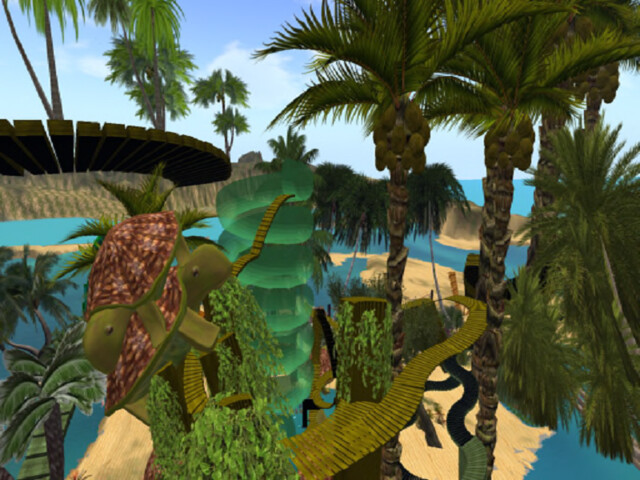
select "turtles" on the region teleport, walk in the water and ... ride a turtle, they are very friendly..... If you decide to rest on a Tiki Beach Lounger ..... watch up the falling coconuts ..... We don't have any hospital on the grid yet ahahahhaah ;-)


Tonight as an Easter treat, DJ Azraella brings us:
J.W. Cooper and the Kaos Crew Part 2.
Another awesome 2 hours plus of Alice Cooper lyrics reimagined by DJ Azraella
with her punchy glitch synth rock blues creations.
If you liked part one, you are gonna love this!
Direct from the Edge of Reality Studios to Subterranea Club Advantis @Neverworld Grid taxi below.
From start to finish this is an incredible set. Don't miss it.
hop://hg.neverworldgrid.com:8002/Advantis/351/276/998
J.W. Cooper and the Kaos Crew Part 2.
Another awesome 2 hours plus of Alice Cooper lyrics reimagined by DJ Azraella
with her punchy glitch synth rock blues creations.
If you liked part one, you are gonna love this!
Direct from the Edge of Reality Studios to Subterranea Club Advantis @Neverworld Grid taxi below.
From start to finish this is an incredible set. Don't miss it.
hop://hg.neverworldgrid.com:8002/Advantis/351/276/998
| | Quint.Ardent: About 30 min to go, so if you still want to enjoy before it's to late. Don't think too long ;) yesterday |

Khiron Ametza Live
Monday, April 6th, 2026
2 pm @ Club Fire
Join us for a wonderful hour enjoying good music among fun people!
Bring your happiness, family, and friends!!!
hop://gentlefire.opensim.fun:8002/Gentle%20Fire%20Grid/21/...
http://gentlefire.opensim.fun:8002/
Region: Gentle Fire Grid
Location: 21,28,22
Monday, April 6th, 2026
2 pm @ Club Fire
Join us for a wonderful hour enjoying good music among fun people!
Bring your happiness, family, and friends!!!
hop://gentlefire.opensim.fun:8002/Gentle%20Fire%20Grid/21/...
http://gentlefire.opensim.fun:8002/
Region: Gentle Fire Grid
Location: 21,28,22

ISOLA OASI COMPLETATA
Pista auto, cavalli, moto, mare navigabile, moto d'acqua, barche, piscina, discoteca, case arredate.

Achtung, Achtung!
Heute ab 19 Uhr verwandelt sich unsere Location in den verrücktesten Bau der Gegend!
Hier hoppeln keine braven Häschen herum…
Nein, hier kommen die Bad Rabbits – frech, wild und garantiert nicht stubenrein!
Was euch erwartet:
Jede Menge kleine, überraschende Geschenke (weil brave Gäste belohnt werden… oder auch nicht)
Tolle Leute, gute Musik, die euch garantiert zum Zappeln bringt
Eine Atmosphäre irgendwo zwischen Osterzauber
Heute ab 19 Uhr verwandelt sich unsere Location in den verrücktesten Bau der Gegend!
Hier hoppeln keine braven Häschen herum…
Nein, hier kommen die Bad Rabbits – frech, wild und garantiert nicht stubenrein!
Was euch erwartet:
Jede Menge kleine, überraschende Geschenke (weil brave Gäste belohnt werden… oder auch nicht)
Tolle Leute, gute Musik, die euch garantiert zum Zappeln bringt
Eine Atmosphäre irgendwo zwischen Osterzauber
| | Cosa: Noch gibt es coole Mucke :-) und Geschenke, ran hier ihr Leutz .... yesterday |

It’s time to hit the sand!
Join us today at 12 Noon Grid Time
for a sizzling Beach Party at Bare Lilies Beach!
Music, sunshine, and good vibes await…
And don’t forget to Bring your ducks!
That’s right, it’s going to be a quackin’ good time!
So grab your friends, your shades, and your beach spirit…
and we’ll see YOU on the sand!
hop://alternatemetaverse.com:8002/Bare%20Lilies%203/67/118...
Join us today at 12 Noon Grid Time
for a sizzling Beach Party at Bare Lilies Beach!
Music, sunshine, and good vibes await…
And don’t forget to Bring your ducks!
That’s right, it’s going to be a quackin’ good time!
So grab your friends, your shades, and your beach spirit…
and we’ll see YOU on the sand!
hop://alternatemetaverse.com:8002/Bare%20Lilies%203/67/118...
Last night, the wonderful and generous (if not mischievous!) Jimmy Olsen spent time teaching me how to make static EEP skies. He doesn't like what I am doing because he wants it to look slightly blurry for more "realism," but mine are not for that. I am thinking about them for doing events at the Playa, even manually changing them out during the events! Or maybe at an art festival! The sky is my canvas! During an art festival, you could share the work of others, changing them out periodically. Thanks for your time and patience, Jimmy! Now the fun begins!
I made a short webpage with a simple tutorial for those that want to play! https://sites.google.com/dynamiclearning.solutions/eep-fun...
I made a short webpage with a simple tutorial for those that want to play! https://sites.google.com/dynamiclearning.solutions/eep-fun...
| | Snowey NativeWolf: ;o love to know how do this looks epic yesterday |

Liebe Barbesucher und Musikzuhörer,
die Osternester sind geleert, Osterspaziergaänge vorbei und die Ostereier gepellt. Somit ist es Zeit, am Dienstagabend ab 20:00 Uhr wieder die Musikalische Rumpelkiste zu leeren, ab 19:30 schonmal vorzulauschen, und dazu wieder in die Haifischbar zu kommen.
Wir grüssen Euch alle mit einem herzlichen "Hai! kommt rein..."
dorenas-world.de:8002:Gridtalk
...........................................................................................................
Dear bar patrons and music lovers,
The Easter baskets are empty, the Easter walks are over, and the Easter eggs are peeled. So it's time to empty the musical treasure trove again on Tuesday evening starting at 8:00 PM. Come listen in from 7:30 PM and join us at the Haifischbar.
We greet you all with a hearty "Shark! Come on in..."
dorenas-world.de:8002:Gridtalk
die Osternester sind geleert, Osterspaziergaänge vorbei und die Ostereier gepellt. Somit ist es Zeit, am Dienstagabend ab 20:00 Uhr wieder die Musikalische Rumpelkiste zu leeren, ab 19:30 schonmal vorzulauschen, und dazu wieder in die Haifischbar zu kommen.
Wir grüssen Euch alle mit einem herzlichen "Hai! kommt rein..."
dorenas-world.de:8002:Gridtalk
...........................................................................................................
Dear bar patrons and music lovers,
The Easter baskets are empty, the Easter walks are over, and the Easter eggs are peeled. So it's time to empty the musical treasure trove again on Tuesday evening starting at 8:00 PM. Come listen in from 7:30 PM and join us at the Haifischbar.
We greet you all with a hearty "Shark! Come on in..."
dorenas-world.de:8002:Gridtalk
Due to current circumstances.^^
| | Pueppi: Victory pose????? What did you win? Oh yeah, right, even more unlikeability points yesterday |

✨ NEUES HIGHLIGHT IN LITTLE CITY! ✨
Es gibt Neuigkeiten, die ihr nicht verpassen dürft! Little City hat Zuwachs bekommen und wir laden euch ein, die neuesten Highlights zu entdecken.
| | CleaPerido: dankeschön yesterday |

| | CleaPerido: dankeschön yesterday |

*Night Fever*
Für jeden Gast gibs Heute ein Eastergifts -Ostergeschenke
Die Vorfreude ist schön, euch alle bald auf unserer Fete zu seh'n. Haltet euch den Termin ja frei und kommt zur wilden Feierei
Es ist wieder Montag und Zeit für die abwechlungsreiche Music von A bis Z
Every guest will receive an Easter gift today.
It's great to see you all at our party soon. Save the date and come along to the wild celebration.
It's Monday again and time for varied music from A to Z
11:00 SLT
Für jeden Gast gibs Heute ein Eastergifts -Ostergeschenke
Die Vorfreude ist schön, euch alle bald auf unserer Fete zu seh'n. Haltet euch den Termin ja frei und kommt zur wilden Feierei
Es ist wieder Montag und Zeit für die abwechlungsreiche Music von A bis Z
Every guest will receive an Easter gift today.
It's great to see you all at our party soon. Save the date and come along to the wild celebration.
It's Monday again and time for varied music from A to Z
11:00 SLT

A one hour Spectacular Concert Featuring the King himself. With DJ Jon Temple, this is not to be missed for any serious Elvis fan. Held in the fabulous Avalon Theatre in London City. 12:00 - 1:30 with DJ Jon and sounds of the 60's, 12:30 - 1:30 the awesome Elvis, Aloha from Hawaii concert, rounding off 1:30 - 2:00pm with DJ Jon.
hop://gentlefire.opensim.fun:8002/London%20City/86/109/606...
hop://gentlefire.opensim.fun:8002/London%20City/86/109/606...
DJ Dragon heute 17 bis 19 Uhr im Bikers Heaven heute mit Klassik Rock.
Nehmt Eure Freunde und kommt rüber zu Bikers Heaven.
Freu mich auf Euch
bis gleich
Dragon
DJane Dragon at Bikers Heaven TODAY 8 to 10 am gridtime today i´m playing
Classic Rock.
Take your friends and come over to Bikers Heaven and lets have some fun.
See you there
Dragon
hop://alternatemetaverse.com:8002/Carpe Noctem/209/221/1496
IM for a teleport
Listen: http://dragon.radioamv.com
Join us at https://alternatemetaverse.com
Nehmt Eure Freunde und kommt rüber zu Bikers Heaven.
Freu mich auf Euch
bis gleich
Dragon
DJane Dragon at Bikers Heaven TODAY 8 to 10 am gridtime today i´m playing
Classic Rock.
Take your friends and come over to Bikers Heaven and lets have some fun.
See you there
Dragon
hop://alternatemetaverse.com:8002/Carpe Noctem/209/221/1496
IM for a teleport
Listen: http://dragon.radioamv.com
Join us at https://alternatemetaverse.com

Some people are sensitive to disagreement, so I'm saving this subthread here as a hedge against deletion. :)
Original thread: https://opensimworld.com/post/129761#cmt89938
I told Dirty Helga we needed MORE LOVE in Dismayland. This is what she came up with! SOMEBODY SAVE ME!
*Night Fever*
Für jeden Gast gibs Heute ein Eastergifts -Ostergeschenke
Die Vorfreude ist schön, euch alle bald auf unserer Fete zu seh'n. Haltet euch den Termin ja frei und kommt zur wilden Feierei
Es ist wieder Montag und Zeit für die abwechlungsreiche Music von A bis Z
Every guest will receive an Easter gift today.
It's great to see you all at our party soon. Save the date and come along to the wild celebration.
It's Monday again and time for varied music from A to Z
11:00 SLT
Für jeden Gast gibs Heute ein Eastergifts -Ostergeschenke
Die Vorfreude ist schön, euch alle bald auf unserer Fete zu seh'n. Haltet euch den Termin ja frei und kommt zur wilden Feierei
Es ist wieder Montag und Zeit für die abwechlungsreiche Music von A bis Z
Every guest will receive an Easter gift today.
It's great to see you all at our party soon. Save the date and come along to the wild celebration.
It's Monday again and time for varied music from A to Z
11:00 SLT

Hi :)
Over the years I collected many plants, flowers, decoration and statues, lots of statues.
None of these are created by me, however they are collected by me lol.
I tried to create a beautiful setup, visit the shops at the square and follow the path to make sure
you won't miss anything. hop://hg.ansjelagrid.com:28002/Imaginaerum/934/175/22
Enjoy
Love
Ansjela
Over the years I collected many plants, flowers, decoration and statues, lots of statues.
None of these are created by me, however they are collected by me lol.
I tried to create a beautiful setup, visit the shops at the square and follow the path to make sure
you won't miss anything. hop://hg.ansjelagrid.com:28002/Imaginaerum/934/175/22
Enjoy
Love
Ansjela
| | LisaHellstein: vielen Dank ♥ yesterday |

Dj Dave Live at His Manic Monday Breakfast Show at 6am grid time at The Landing point at AlternateMetaverse Grid, Join Him today as its Manic Monday , Everybody is welcome yehaaaaa


|
Rev World
6 members |
|
Dream & Laugh group
1 members |

|
Scottish Pride
4 members |

|
Virtual World Creations
1 members |

|
The PurpleP lumbob Estates
1 members |

|
Testing
2 members |
|
|
Erotic SIMs
0 members |
|
OpenSimulator
5 members |

|
Society 3D
1 members |