OpenSimWorld is the directory of 3D Virtual Worlds based on OpenSimulator and connected through the HyperGrid. Learn More

New Members
MiaAraBella, EcTeTkA, SpykerXenno, Laeliarainbow, Magick Caudron, Isabelle_Jeannette, OberonDiastima, Jackkelso, DreamFantasy, Pvausasmm166, Johan_brekke, Pvausasmm144, Lendario2026, Creekmanblueditko, DianaAvro, Stoner, Danis, Lisa Blecher, LyvyaDorian, StarMoonlightLikes

Manure
what can i do with the manure of cats that expires in 10 days? can it be added to the ground?
what can i do with the manure of cats that expires in 10 days? can it be added to the ground?

recording studio
does anyone know where i can get mock or working recording studio equipement i am trying to add a couple to my city

NEW !!!

Golden Age will be staying at VWZgrid as long as the gridowner it wants. It's my gift to him, for his generousity to give me free sims to work at them.
All the work I make at his grid, will be given to the gridowner to use in Open Sim , just because we can haha!
All the work I make at his grid, will be given to the gridowner to use in Open Sim , just because we can haha!
How can i create a black cat?

Region Setting Changed
Region:
Masons 2
Grid:
DigiWorldz
Rating:
Adult
Category:
Entertainment
Added by :
Trynatie Mason
Created :
2 years ago
Traffic Rank:
18th
My Region Settings Keeps Changing to Masons 2 From Rock City , Should Read Rock City and when i change it back from Masons 2 to Rock City Sometimes it takes sometimes it don't , i do not even have a beacon for Masons 2
Masons 2
Grid:
DigiWorldz
Rating:
Adult
Category:
Entertainment
Added by :
Trynatie Mason
Created :
2 years ago
Traffic Rank:
18th
My Region Settings Keeps Changing to Masons 2 From Rock City , Should Read Rock City and when i change it back from Masons 2 to Rock City Sometimes it takes sometimes it don't , i do not even have a beacon for Masons 2

We have 27 Rentals in Cozy Comforts City, the Hotel and CC World.... most of them are vacant.... they dont cost anything.... come to Holiday Land!

OMG SUNDAYS ARE SO BUSY WITH TALENT!! This is Zuzu at Infinity.

Translator
I think it would be fabulous if OpenSimWorld had a translator. I see people frustrated with one another replying in different languages. I know it so complicated to copy and paste to a google translator but I see people snipping at one another getting their knickers in a twist. LOL.
Website domain name and hosting (or supply your own).
Daily backup (stored locally on our backup machine)
HyperGrid enabled (or closed the choice is yours).
Vivox chat (Voice).
Easy avatar registration dashboard
Working search and classifieds.
Grid splash page.
Profiles and Groups inworld.
Inworld restart.
30 sims 256X256
https://www.virtualife.cloud/index.php/grid-hosting
Daily backup (stored locally on our backup machine)
HyperGrid enabled (or closed the choice is yours).
Vivox chat (Voice).
Easy avatar registration dashboard
Working search and classifieds.
Grid splash page.
Profiles and Groups inworld.
Inworld restart.
30 sims 256X256
https://www.virtualife.cloud/index.php/grid-hosting



Are there any fat-packs included in this outfit? Hell ya!
oh HELLO | Outfits with Options, The Body Shop and the Outfit Challenge.
hop://fireandicegrid.net:8002/Xinashi/930/1040/43

Thanks to all those who gave me a like lately.
I l'♥ U all
Xo-Xo

Can't find someone to sail with you today? Then you can create an NPC sailor to follow you and your SFsail boat!
The sailboats in the current package in OSW region already contain an NPC named "Sailor". You have to edit .SFconfig and change "Firstname Lastname" to your own avatar name, for example:
Button=FollowMe=LINKMSG{-4;889;follow Satyr Aeon}
Then Right click to touch the boat (without sitting) and select Options ->NPCs->ADD->My NPC. Your NPC should sit on the boat now
Touch the boat again and select Options -> FollowMe , then select Options -> Autotrim and then select Options->Raise. The boat with the NPC will now follow you. You can sit on your own boat and sail together.
Learn more about SFsail here: https://opensimworld.com/sfsail
The sailboats in the current package in OSW region already contain an NPC named "Sailor". You have to edit .SFconfig and change "Firstname Lastname" to your own avatar name, for example:
Button=FollowMe=LINKMSG{-4;889;follow Satyr Aeon}
Then Right click to touch the boat (without sitting) and select Options ->NPCs->ADD->My NPC. Your NPC should sit on the boat now
Touch the boat again and select Options -> FollowMe , then select Options -> Autotrim and then select Options->Raise. The boat with the NPC will now follow you. You can sit on your own boat and sail together.
Learn more about SFsail here: https://opensimworld.com/sfsail
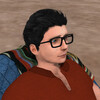
Same dress, different styles.
Here is Juno in one of her favourite dresses, Loru Destiny's Burta Dress. It's also one of the few dresses which fit Ruth2 v4 perfectly without the need of an alpha layer so it can quickly be put on and taken off. Unlike most other short dresses, Juno says, it's loose enough for hot summer days and long enough to neither look slutty nor mean significant upskirt danger on stairs.
On the left, she is wearing it "summer casual" style with Rana flip-flops as if she's ready to go to the beach. On the right, she is wearing it with make-up and red medium pumps by Klarabella Karamell, more fit for a party (it was too warm for tights, though).
Here is Juno in one of her favourite dresses, Loru Destiny's Burta Dress. It's also one of the few dresses which fit Ruth2 v4 perfectly without the need of an alpha layer so it can quickly be put on and taken off. Unlike most other short dresses, Juno says, it's loose enough for hot summer days and long enough to neither look slutty nor mean significant upskirt danger on stairs.
On the left, she is wearing it "summer casual" style with Rana flip-flops as if she's ready to go to the beach. On the right, she is wearing it with make-up and red medium pumps by Klarabella Karamell, more fit for a party (it was too warm for tights, though).


Another new slot has arrived at HGC: Alien Spinvasion ! This time it is a space themed, fast 20 line videoslot with freespin bonus that doubles all wins ! If you want to play, just take 2 minutes to make your Neverworld Grid play-account and hop in for some fun: http://hg.neverworldgrid.com:8002/wifi/user/account/
My two cents on the Copy/Sharing Drama going around
Hey guys,
I'm pretty sure we are all tired to read about the dramas regarding the re-sharing of the items grabbed from other places, which are not our own. So here's my take on all this.
1. Despite the fact that they are taken from SL, loading them, texturing them, animating them and curating them takes time and nerves. Please appreciate the time put into that work.
2. The people who are sharing them with the rest of us are not charging anything for the items, so if they feel like they want to have a certain control over who is taking their stuff and what happens with it, it is their right because see point no 1, you know...time and dedication
3. Let's say the item you got a while ago gets updated. Of course you would say..."so what? I go get another copy!" BUT the store you got it from got it as well from another store, so you do not manage to get to the original store who offered it originally.
4. Why would we want same items in every store we go? I for example am tired to go all around OS and see same item over and over again!
5. If you think is no big deal because it is anyways copy from SL then you do it on your own! Go buy the items first, spend a lot of money to get the original, then go through the whole ordeal of copying it, loading it, texturing it and place it in boxes or arrange it a bit and then you can shout and scream your frustration.
6. How many of you have ever thought about the fact that those people who offer you the free stuff might feel a little more appreciated if you would return to their store to just see what's new and get other items you might like? Or maybe it is the traffic they want? Is really not a big deal to open our minds and think a bit deeper
7. Sacrarium grid is not available to everyone, that is a fact. BUT if you want to redistribute items you got there, be curtaneous and ask the owner of the item if they might consider offering it to you? You never know what the answer is, right? Human nature is giving, therefore I am more then sure that you can achieve more with talking first rather then just taking and not care.
Let's respect eachother a little bit more and give the Cesar what is his! Appreciate the fact that they are taking the time and the will to offer their items. And share more love, rather then items!
Last but not least, I saw some messages about closing the sims... duh...be our guest! If you do not want us we surely won't miss you either...and btw...donating means freely giving not requesting or expecting it!
So please, respect everyone so they can respect you back!
I'm pretty sure we are all tired to read about the dramas regarding the re-sharing of the items grabbed from other places, which are not our own. So here's my take on all this.
1. Despite the fact that they are taken from SL, loading them, texturing them, animating them and curating them takes time and nerves. Please appreciate the time put into that work.
2. The people who are sharing them with the rest of us are not charging anything for the items, so if they feel like they want to have a certain control over who is taking their stuff and what happens with it, it is their right because see point no 1, you know...time and dedication
3. Let's say the item you got a while ago gets updated. Of course you would say..."so what? I go get another copy!" BUT the store you got it from got it as well from another store, so you do not manage to get to the original store who offered it originally.
4. Why would we want same items in every store we go? I for example am tired to go all around OS and see same item over and over again!
5. If you think is no big deal because it is anyways copy from SL then you do it on your own! Go buy the items first, spend a lot of money to get the original, then go through the whole ordeal of copying it, loading it, texturing it and place it in boxes or arrange it a bit and then you can shout and scream your frustration.
6. How many of you have ever thought about the fact that those people who offer you the free stuff might feel a little more appreciated if you would return to their store to just see what's new and get other items you might like? Or maybe it is the traffic they want? Is really not a big deal to open our minds and think a bit deeper
7. Sacrarium grid is not available to everyone, that is a fact. BUT if you want to redistribute items you got there, be curtaneous and ask the owner of the item if they might consider offering it to you? You never know what the answer is, right? Human nature is giving, therefore I am more then sure that you can achieve more with talking first rather then just taking and not care.
Let's respect eachother a little bit more and give the Cesar what is his! Appreciate the fact that they are taking the time and the will to offer their items. And share more love, rather then items!
Last but not least, I saw some messages about closing the sims... duh...be our guest! If you do not want us we surely won't miss you either...and btw...donating means freely giving not requesting or expecting it!
So please, respect everyone so they can respect you back!

Whats wrong, where are the Opensim i liked?
oh my lord, I love to wake up, to sit here at the pc, to open OSW and to be able to see, no, nothing has improved; everything like yesterday; the rush continues! no matter who, no matter why, the main thing is to find a reason to be able to scold an avatar, a grid or a group! WHY?

New:
The things we hide + Endometriosis

the casino is down until Gloebits can be fixed, sorry for the inconvenience

Comment names of places where copy bot is allowed.

New store added in my region....adult store and bdsm store items..the best items in opensim i have collect ..all for you free and full perm...welcome all
So how does this work?
I recently got a region and put out my farm. But even with the farmer rezzed, my crops just run up to 100% ready, then click back to 0% and start growing again. I can't figure out how to actually harvest them. Is anyone able to tell me what I'm doing wrong? Thank you!

Couple Poses?
Hello :) I'm looking for couples poses for photos.. does anyone know where I can find some? Thank you!
Hello :) I'm looking for couples poses for photos.. does anyone know where I can find some? Thank you!

The fantasy part of my region keeps growing,who can resist all those pretty colors!!

Rima is named for the heroine in the old movie Green Mansions. She was played by Audrey Hepburn and it is a beautiful fantasy sort of movie- minus the fairies and such!
It takes place in the Amazonian jungles.
So Rima is a foresty-jungly area that inexplicably is snowbound just beyond the bridge..
Hey- it's MY fantasy ;)
It takes place in the Amazonian jungles.
So Rima is a foresty-jungly area that inexplicably is snowbound just beyond the bridge..
Hey- it's MY fantasy ;)
Happy Birthday Arkham Grid PARTY-MUSIC-LIVE
╠▧▧▧░▒ LIVE MUSIC ▒░▧▧▧
╠▧▧▧►Dj : DOCTOR
╠▧▧▧►What : ♬Arkham Grid ♬
╠▧▧▧►When : 1Pm SLT January 2
------------------------------------
╠▧▧▧░▒ TECHNO ▒░▧▧▧
╠▧▧▧►Dj : DjChanel Hurricane
╠▧▧▧►What : ♬Arkham Grid ♬
╠▧▧▧►When : 3Pm SLT January 2
Noodle's Garage Sale is back up .....

You ready to PARTAY?! Come check out the grand opening of The Rusty Nail this Monday, Dec. 28th at 4:30pm grid time. DJ Kawaii will be spinning her best techno beats! Let's dance, get drunk and rave a little as I celebrate my RL birthday with you. Come as you are! Open bar ;)

Ein aufregendes Jahr liegt hinter uns.
Wir hatten Verluste.
Manche taten weh, manche weniger.
Wir hatten aber auch Gewinne
Der größte Gewinn war
Teil einer funktionierenden, lebensfrohen, lebendigen Gemeinschaft geworden zu sein.
Teil eines Grids zu sein,in dem Freundschaft nicht nur ein geklauter Werbeslogan ist.
Teil eines Grids zu sein, dass eigenständig zurecht kommt.
Dafür sind wir sehr dankbar. Unseren Bewohnern und allen, die uns dies ermöglicht haben, wie auch unseren zahlreichen Besuchern.
Möge die Zeit der bollernden Heizungen und prasselnden Kamine die Herzen der Menschen erwärmen und der Duft der Tannenbäume
all den Menschen die schlechten Gedanken vertreiben
Wir wünschen Euch allen ein besinnliches Weihnachtsfest, einen sensationell schönen Start ins neue Jahr und bleibt gesund.
Euch allen ein besinnliches und herzerwärmendes Weihnachtsfest
wünschen Euch Nasti und Rudi vom Soul Grid
Wir hatten Verluste.
Manche taten weh, manche weniger.
Wir hatten aber auch Gewinne
Der größte Gewinn war
Teil einer funktionierenden, lebensfrohen, lebendigen Gemeinschaft geworden zu sein.
Teil eines Grids zu sein,in dem Freundschaft nicht nur ein geklauter Werbeslogan ist.
Teil eines Grids zu sein, dass eigenständig zurecht kommt.
Dafür sind wir sehr dankbar. Unseren Bewohnern und allen, die uns dies ermöglicht haben, wie auch unseren zahlreichen Besuchern.
Möge die Zeit der bollernden Heizungen und prasselnden Kamine die Herzen der Menschen erwärmen und der Duft der Tannenbäume
all den Menschen die schlechten Gedanken vertreiben
Wir wünschen Euch allen ein besinnliches Weihnachtsfest, einen sensationell schönen Start ins neue Jahr und bleibt gesund.
Euch allen ein besinnliches und herzerwärmendes Weihnachtsfest
wünschen Euch Nasti und Rudi vom Soul Grid

Merry Christmas for all.
Joyeux Noel pour tous.
Fröhliche Weihnachten.
I Love you so Much ♥♥♥
TRUST. 1: Trust, assurance, confidence imply a feeling of security. Trust implies instinctive unquestioning belief in and reliance upon something: to have trust in one's parents, friends, partners, business associates, etc. Confidence implies conscious trust because of good reasons, definite evidence, or past experience: to have confidence in the outcome of events.
What do you do when trust has been broken? How do you react to broken trust in something or someone? Trust is a very hard to build, it takes a lot of respect, belief in the positive, truth, communication, etc. But.. It's so very easy to lose.. When someone or something breeches or does something for you to NOT trust them anymore.. how do you react to that kind of disappointment? **Thinking out loud.. would love to hear your thoughts and comments on this.
What do you do when trust has been broken? How do you react to broken trust in something or someone? Trust is a very hard to build, it takes a lot of respect, belief in the positive, truth, communication, etc. But.. It's so very easy to lose.. When someone or something breeches or does something for you to NOT trust them anymore.. how do you react to that kind of disappointment? **Thinking out loud.. would love to hear your thoughts and comments on this.

Our PacificNorthwest region is home to Cannabis Information Center with Leafly info. Beautiful and relaxing, with educational literature on Cannabis. continuum.outworldz.net:8002:PacificNorthwest

WHAT IS THIS????????? LOLOLOL I very good at knowing alot about vintage items their use and year. AND 2 HOURS LATER I GIVE UP! Anyone know? lololol
We had a great time. Wonderful music by Rogue and Rhonda, great friends. I put the whole Gatsby club in a box and more 1920s stuff boxes all free for you AT THE SHOP. hugssssssssssssss THE SHOP IS JUST DOWN THE LITTLE ROAD FROM THE CLUB or on the Teleporter
DJ Nico at Magic Moments Venue
Saturday December 5, 2020
Time: Now to 9pm Grid Time
DJ Nico not only loves music, but he has an intense passion for DJing, and it shows. His music is great! So come on lets get this party started! Lets get those good vibes flowing!
Taxi: hg.osgrid.org:80:Ver Sea
Join our VIP Venue Groups to keep abreast of upcoming events!
Magic Moments Venue
Magic Garden Venue
Saturday December 5, 2020
Time: Now to 9pm Grid Time
DJ Nico not only loves music, but he has an intense passion for DJing, and it shows. His music is great! So come on lets get this party started! Lets get those good vibes flowing!
Taxi: hg.osgrid.org:80:Ver Sea
Join our VIP Venue Groups to keep abreast of upcoming events!
Magic Moments Venue
Magic Garden Venue
Christmas tree earrings, with low lag blinking lights. Free - Full Perms -Scripts can be removed too, I had to do it please don't hate me lol it is so pretty!
continuum.outworldz.net:8002:Monentes Jewelry
continuum.outworldz.net:8002:Monentes Jewelry

BOM Caterina - Dia De Los Muertos Now at Steamland

|
OpenSim Military Community
2 members |

|
OSGrid Furry Continent
2 members |
|
FUNSIZE EXPLORERS
2 members |
|
Fantasy Business
1 members |

|
INFINITY
1 members |

|
NightWalker Fashion Depo
2 members |
|
|
Open access
3 members |
|
Virtualife italian grid
2 members |
|
That Place Amusements
2 members |